
Inside Fleming County Property Tax Records
Two offices split the work. The Fleming PVA identifies each parcel and sets its value, while the Fleming County Sheriff's tax office issues and collects the bill that value produces. That mix trips people up. A tax-payment record answers whether a bill was collected, nothing more. It does not prove title. It also cannot explain every element of the valuation, so deed questions and appraisal questions each belong with a different record.
| Field | What It Shows | Where |
|---|---|---|
| Land, improvement and total assessment | The components used to value the parcel for the assessment roll | Fleming PVA / qPublic |
| Property class | Whether the card identifies a farm or another class | Fleming PVA / qPublic |
| Exemption | A reduction applied to qualifying property, not a change in ownership | Fleming PVA |
| Tax year, bill and status | The year's charge, collection stage and payment status | Fleming County Sheriff |
| Delinquency transfer | Whether an unpaid bill has moved from sheriff collection to the county clerk | Sheriff, then County Clerk |
Kentucky assesses real property at fair cash value under KRS 132.191. Land and improvements may appear separately. Qualifying farmland can carry an agricultural value instead. A recorded sale price is a different kind of fact entirely. Before using it as a comparison, weigh the sale date, qualification code, and circumstances, since a zero-dollar transfer between close relatives can convey real title without reflecting an open-market price.
A Fleming Farm Card Separates the Numbers
A Fleming qPublic farm card shows why the parts matter. One 256.08-acre card listed $700,000 in land value. The card carried no improvement value, so the total matched the land at $700,000. That is one parcel, not a county norm. Transcribing acreage, property class, land, improvements, total, agricultural treatment, and assessment year into separate fields keeps the numbers honest.
Farm classification alone proves little. It does not settle eligibility for agricultural valuation, conservation status, or zoning. Rural parcels can carry multiple road frontages, older surveys, and an out-of-state mailing address. Compare PVA acreage against the deed and any plat. When agricultural treatment affects the bill, ask the PVA for its current use requirements.
Note: A Fleming farm's mailing address can be outside Kentucky while its situs and tax jurisdiction remain in Fleming County.
The Fleming County Collection Calendar Changes the Amount
The sheriff's published 2025 calendar set a two-percent discount from October 1 through November 1. Face value ran November 2 through December 31. A five-percent penalty followed from January 1 through January 31, and a 21-percent penalty applied from February 1 through April 15. Those dates cover one cycle only. Recheck them for later years.
| Collection stage | 2025 dates | Record question |
|---|---|---|
| Discount | Oct. 1 to Nov. 1 | Was the reduced amount paid on time? |
| Face amount | Nov. 2 to Dec. 31 | What was the original bill? |
| First penalty | Jan. 1 to Jan. 31 | What balance remained? |
| Final sheriff stage | Feb. 1 to Apr. 15 | Did the bill transfer after collection closed? |
The office takes cash, check, money order, and card. The published card and phone fee runs 2.5 percent. A 24-hour drop box is available, and mailed payments depend on postmarks, so timing matters. Verify the current year's rules before paying.
The official sheriff tax page carries the current collection rules.
The captured page provides the office fallback when a vendor tax search is unavailable.
Why April 15 Redirects a Fleming Tax Search
After April 15, delinquent bills move to the Fleming County Clerk under Kentucky's statutory framework. That framework includes KRS 134.122. Start with the sheriff. Ask the sheriff's office for the billing year and the payment stage. Do that before going anywhere else. The clerk handles what comes next. That office can supply a certificate of delinquency, an assignment, or a release. A sale or foreclosure leads into the court file and any later recorded deed.
Do not infer ownership from delinquency. An unpaid bill or sale notice is a lead. Confirm the order, sale confirmation and recorded conveyance before identifying a new owner.
Look Up a Fleming County Tax Bill
The sheriff links to the Fleming tax portal. The portal's search fields can change, so confirm which keys the live form accepts before relying on it. Bill number, owner, address, or parcel number may work. When the screen fails, the sheriff, not a generic third-party site, is the documented fallback.
- Open the PVA card by situs address or parcel ID and copy its identifier exactly, including leading zeroes and punctuation.
- Search the current sheriff-linked portal, or contact the tax office with the tax year, parcel/map number, owner and situs.
- Record the bill number, original amount, payment date, discount or penalty, and whether the account is delinquent.
- Return to the PVA card for exemptions and valuation questions; move to the clerk if the delinquent bill has transferred.
- Assessed value
- The PVA's value for assessment purposes, with land and improvements potentially shown separately.
- Levy
- The rate applied by a taxing authority; it is distinct from the parcel's assessed value.
- Homestead exemption
- A statutory reduction for an eligible person's qualifying principal residence.
- Tax lien
- A claim arising from unpaid tax; investigate its filing, assignment, release and priority separately.
Fleming Homestead Relief Follows Kentucky Rules
The Kentucky homestead program covers qualifying owners who are 65 or older or totally disabled, subject to the state's rules. It must be their principal residence on January 1. Ownership and occupancy both matter, and the application goes through the Fleming PVA. Only one exemption applies. A qualifying person or married couple may claim just a single one.
The state also publishes current homestead guidance.
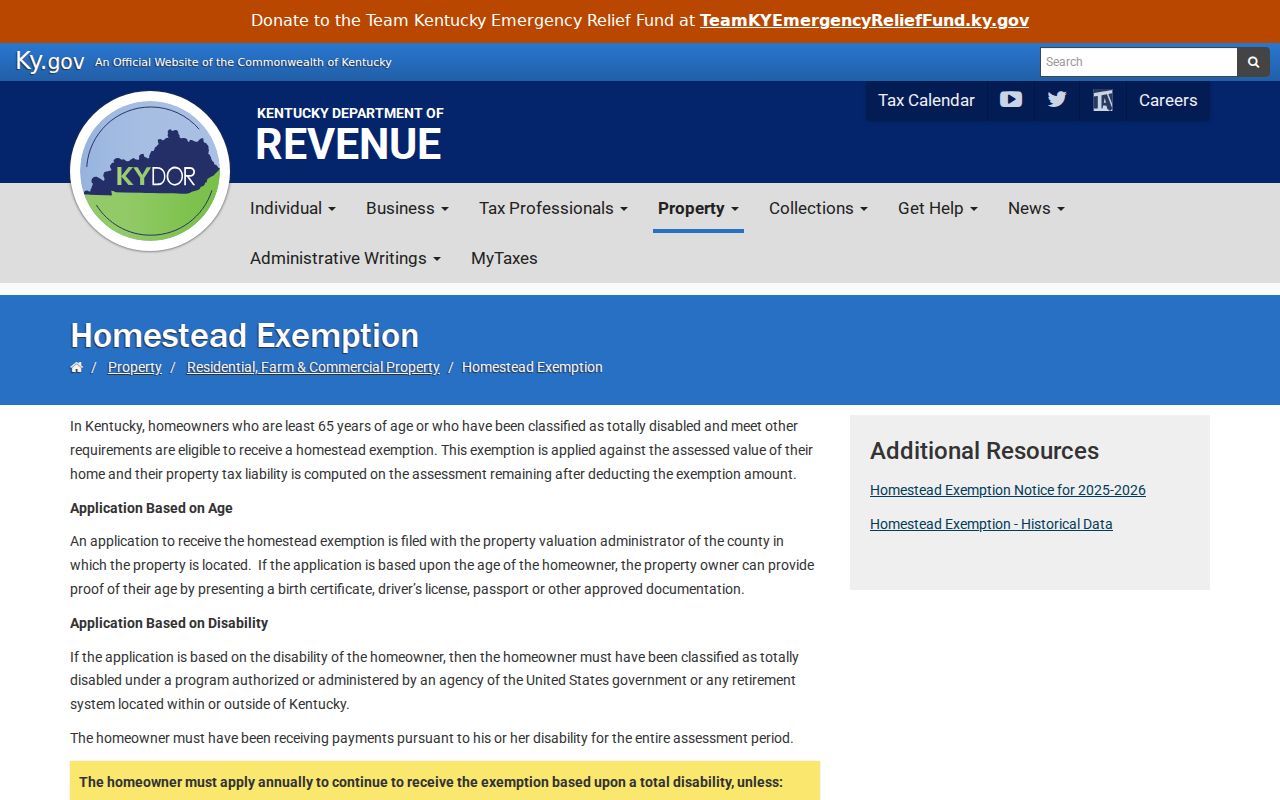
Start with the current state amount and eligibility language. Then apply through the Fleming PVA. For 2025 and 2026, the published exemption amount is $49,100. That figure subtracts from the assessed value before the tax calculation. It is not a payment credit, and it does not change the deed. Historical comparisons should use the amount for the correct biennium. Kentucky adjusts the figure over time.
Annual Values and Four-Year Field Reviews
Kentucky reassesses real property every year. The Kentucky assessment process requires a physical inspection of each parcel at least once every four years. A property valuation administrator may rely on sales comparison, cost, income, or subdivision-development methods. The state publishes no Fleming County ratio study, and the county posts none either.
The Department of Revenue lays out its assessment explanation on its official page.
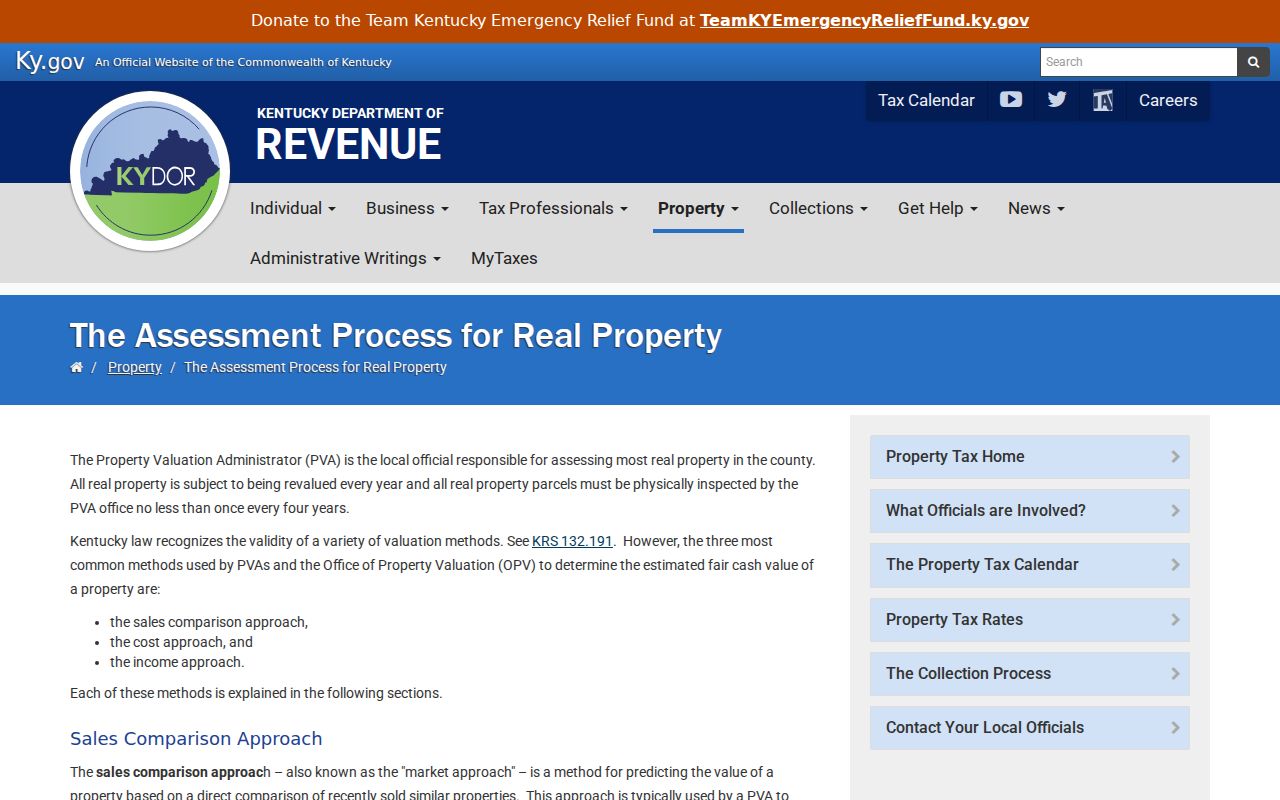
The state supplies the framework. The Fleming PVA card holds the parcel-specific facts. A defensible comparison keeps assessment year, tax year, and sale year separate. Note the rest too. Record whether a sale was qualified, whether improvements changed, and whether agricultural valuation applies. Those distinctions matter most when a taxpayer brings comparable sales to a conference.
Contest a Fleming County Assessment
Fleming County follows the standard Kentucky property-tax calendar when a taxpayer disputes an assessment. Each year opens with a two-week inspection window in May. That is when the taxpayer sits down with the PVA first. If the conference settles nothing, the next stop is the local board of assessment appeals, which usually convenes 25 to 35 days after inspection closes. From there, a further protest goes to the Department of Revenue within 30 days of notice. The Department of Revenue publishes the full state appeal calendar each year.
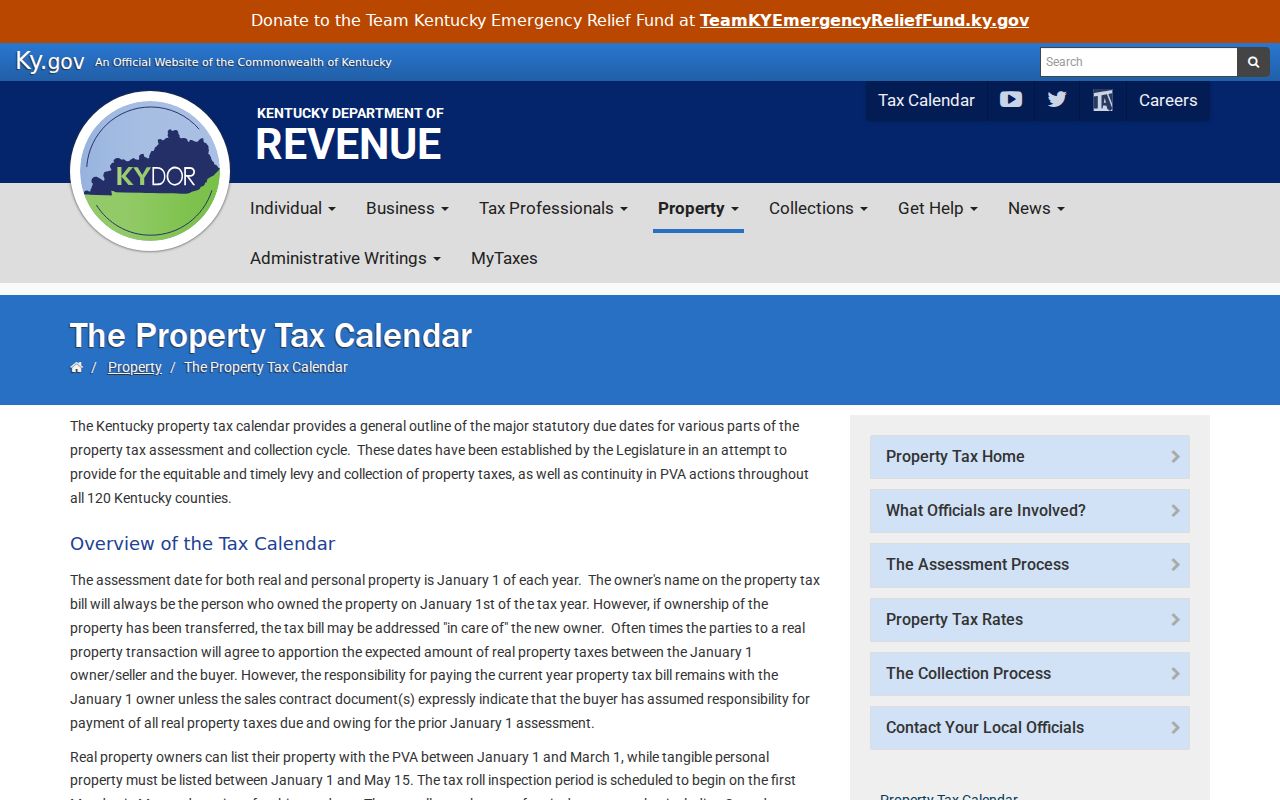
State timelines still have to bend to Fleming County's own dated inspection notice. For 2026, that local notice set roll inspection from May 26 through June 9, and the published local notice governs over the generic calendar for that year. Gather evidence before the conference. Physical characteristics, construction cost, insurance figures, and comparable sales or listings all carry weight. Farm valuation disputes may also require proof of qualifying agricultural use. Organize everything by assessment year, and explain plainly why each comparison is similar.
Appeal window. Conference with the Fleming PVA during the published inspection period before filing the local-board appeal; for 2026, the notice listed May 26 through June 9.
Reconcile the PVA, Sheriff and Clerk
A thorough Fleming County property tax check lines up three dates from three offices. The PVA supplies the assessment date. The sheriff holds the tax year and payment event. The clerk's deed or delinquency filing supplies the third. A mismatch among them is a question, not proof an office slipped up. The assessment roll may lag behind a sale, the tax mailing address may have changed, a bill may have transferred, or probate may delay an owner of record update.
Copy the parcel ID exactly. Keep situs and mailing address distinct, and preserve the bill year. A sale notice needs the court case, sale report, and confirmation attached. Ownership questions go to the recorded deed itself. Working the three offices this way keeps valuation, tax collection, and title from collapsing into one unreliable conclusion.